





As a cat owner, you may have noticed that your feline friend has a unique relationship with sleep. Cats are crepuscular creatures, meaning they are most active during the dawn and dusk hours. This natural instinct stems from their wild ancestors, who hunted during these times.
Understanding this behavior is crucial for you to create a harmonious living environment for both you and your cat. You might find that your cat sleeps anywhere from 12 to 16 hours a day, with some even reaching up to 20 hours in a 24-hour period. This extensive sleep is not just laziness; it’s a vital part of their health and well-being.
Recognizing your cat’s sleep patterns can help you anticipate their needs and behaviors. For instance, if your cat is particularly active at night, it may be due to their instinctual hunting behavior kicking in. You may notice them pouncing on imaginary prey or engaging in playful antics.
By understanding these natural rhythms, you can better align your activities with your cat’s schedule, ensuring that both of you can enjoy restful nights and engaging days together.
Key Takeaways
- Cats have natural sleep patterns that influence their nighttime behavior.
- A cozy, quiet sleeping environment helps cats rest better at night.
- Establishing a consistent bedtime routine can encourage your cat to sleep through the night.
- Positive reinforcement is effective for promoting good nighttime habits in cats.
- Patience and consistency are key when training your cat to sleep through the night.
Creating a Comfortable Sleeping Environment for Your Cat
To ensure your cat gets the quality sleep they need, it’s essential to create a comfortable sleeping environment. Start by selecting a quiet, cozy spot in your home where your cat can retreat without disturbances. Cats often prefer elevated spaces or enclosed areas where they feel safe and secure.
Consider investing in a soft, plush bed or even a cat tree that provides both comfort and a vantage point for your cat to observe their surroundings. Temperature also plays a significant role in your cat’s comfort. Cats generally prefer warmer environments, so make sure their sleeping area is not too cold or drafty.
You might want to place their bed in a sunny spot during the day, allowing them to soak up warmth and light. Additionally, consider using blankets or soft cushions to make the space inviting. By creating a designated sleeping area that caters to your cat’s preferences, you can encourage them to settle down and enjoy their much-needed rest.
Establishing a Bedtime Routine for Your Cat
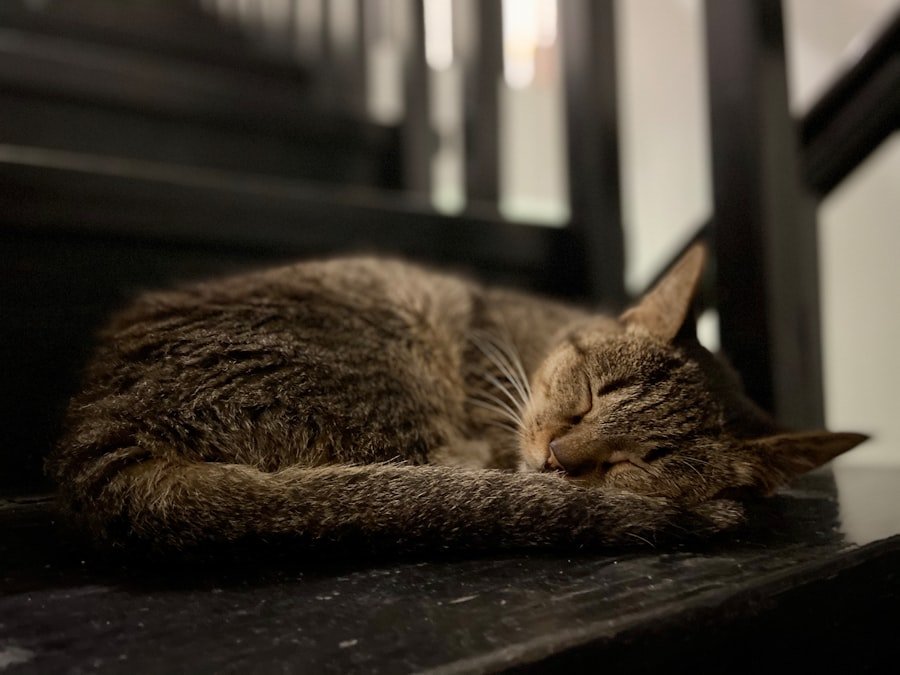
Just like humans, cats thrive on routine. Establishing a bedtime routine can signal to your cat that it’s time to wind down for the night. You might start by engaging in calming activities with your cat in the evening, such as gentle petting or quiet playtime with soft toys.
This not only helps them expend any excess energy but also strengthens the bond between you two. Incorporating feeding into this routine can also be beneficial. Cats often associate mealtime with comfort and security, so serving their last meal of the day before bedtime can help them feel more relaxed.
After feeding, you could dim the lights and play soft music or use a white noise machine to create a soothing atmosphere. By consistently following this routine, you’ll help your cat understand that nighttime is for rest, making it easier for them to settle down when the day comes to an end.
Using Positive Reinforcement to Encourage Nighttime Behavior
Positive reinforcement is an effective strategy for encouraging desired behaviors in your cat. When your feline friend exhibits calm behavior during the night, reward them with treats or affection. This could mean giving them a small treat when they settle down in their bed or offering praise when they refrain from waking you up during the night.
By associating good behavior with positive outcomes, you reinforce the idea that nighttime is for sleeping. You might also consider using toys or interactive play sessions as rewards during the day. Engaging your cat in stimulating activities can help tire them out, making it more likely they will sleep through the night.
The key is to be consistent with your rewards; over time, your cat will learn that calm behavior at night leads to positive experiences, encouraging them to adopt this behavior more regularly.
Avoiding Negative Reinforcement for Nighttime Behavior
While it may be tempting to scold or punish your cat for disruptive nighttime behavior, negative reinforcement can often lead to more problems than solutions. Cats do not respond well to punishment; instead of understanding what they did wrong, they may become anxious or fearful, which can exacerbate nighttime issues. Instead of resorting to negative reinforcement, focus on understanding the root cause of their behavior.
If your cat is meowing or being overly active at night, try to identify any triggers that may be causing this behavior. It could be boredom, hunger, or even anxiety. By addressing these underlying issues rather than punishing them, you create a more positive environment that encourages better nighttime habits.
Remember, patience and understanding are key when it comes to modifying your cat’s behavior.
Addressing Any Underlying Medical or Behavioral Issues

Sometimes, disruptive nighttime behavior can stem from underlying medical or behavioral issues that require attention. If you notice sudden changes in your cat’s sleeping patterns or if they seem restless at night, it’s essential to consult with a veterinarian. Conditions such as hyperthyroidism, arthritis, or even anxiety can affect your cat’s ability to sleep soundly.
In addition to medical concerns, behavioral issues may also play a role in nighttime disruptions. Stressors such as changes in the household environment or the introduction of new pets can lead to anxiety in cats. Observing your cat’s behavior closely can help you identify any potential triggers.
If necessary, working with a professional animal behaviorist can provide valuable insights and strategies tailored specifically to your cat’s needs.
Seeking Professional Help if Necessary
If you’ve tried various strategies and still find yourself struggling with your cat’s nighttime behavior, seeking professional help may be the best course of action. A veterinarian can rule out any medical issues that may be affecting your cat’s sleep patterns and provide guidance on appropriate treatments if needed. Additionally, consulting with an animal behaviorist can offer tailored advice based on your specific situation.
Professional guidance can be particularly beneficial if your cat exhibits signs of severe anxiety or stress-related behaviors at night. These experts can help you develop a comprehensive plan that addresses both environmental factors and behavioral modifications. Remember that seeking help is not a sign of failure; rather, it demonstrates your commitment to providing the best care for your feline companion.
Being Patient and Consistent in Training Your Cat to Sleep Through the Night
Training your cat to sleep through the night requires patience and consistency. Just as with any behavioral modification process, results may not be immediate. It’s important to remain committed to the routines and strategies you’ve established while being mindful of your cat’s unique personality and needs.
Consistency is key; try to maintain the same bedtime routine every night and reinforce positive behaviors consistently. Over time, as your cat becomes accustomed to this routine and understands what is expected of them during nighttime hours, you will likely see improvements in their sleeping habits. Remember that every cat is different; some may adapt quickly while others may take longer.
Your dedication and understanding will ultimately lead to a more peaceful nighttime experience for both you and your beloved feline friend.