




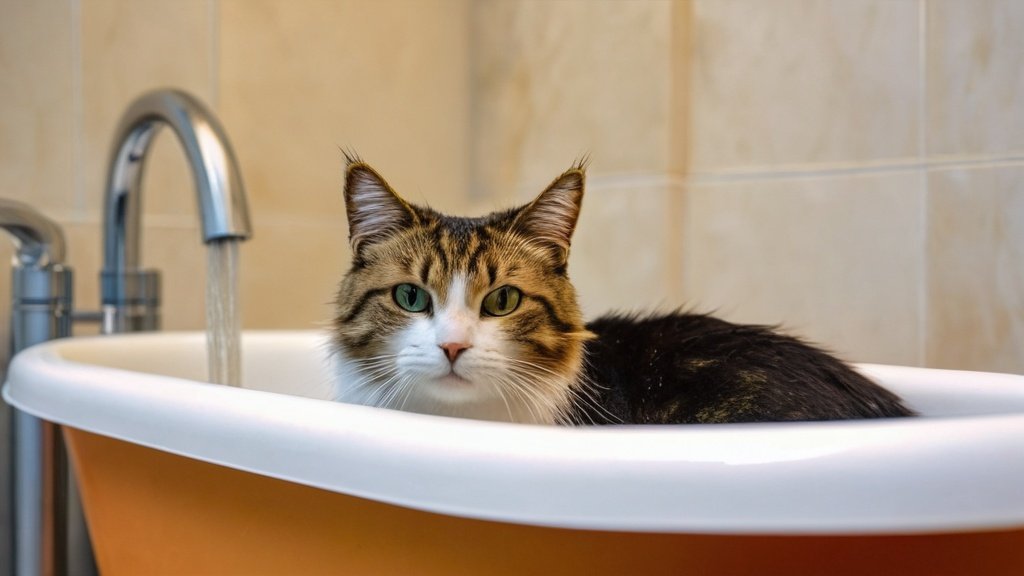
Cats are fascinating creatures, and their relationship with water is often perplexing. Unlike dogs, who may revel in splashing around, many cats exhibit a strong aversion to water. This behavior can be traced back to their evolutionary history.
As descendants of desert-dwelling felines, cats have adapted to environments where water is scarce. Consequently, they have developed a natural instinct to avoid getting wet. You might notice that your cat prefers to stay dry, often avoiding puddles or even the rain.
Understanding this instinctual behavior is crucial as you prepare to introduce your feline friend to the bath. Moreover, your cat’s individual personality plays a significant role in how they react to water. Some cats may be more curious and willing to explore, while others may be more skittish and resistant.
If you’ve ever seen your cat cautiously approach a dripping faucet or curiously paw at a bowl of water, you’ve witnessed their complex relationship with this essential element. Recognizing these nuances in behavior can help you tailor your approach when it comes time for a bath, ensuring that the experience is as stress-free as possible for both you and your furry companion.
Key Takeaways
- Cats often dislike water due to their natural behavior and sensitivity to temperature.
- Preparing the bath area and choosing gentle, cat-specific products helps ensure a positive experience.
- Gradually introducing your cat to water and using calm, reassuring techniques reduces stress.
- Drying and grooming your cat properly after the bath maintains their comfort and coat health.
- Rewarding and comforting your cat post-bath reinforces positive associations with the experience.
Preparing for the bath
Preparation is key when it comes to bathing your cat. Before you even think about filling the tub or sink with water, take some time to gather all the necessary supplies. You’ll want to have everything within arm’s reach to minimize any potential stress for your cat.
This includes towels, cat shampoo, a non-slip mat, and perhaps even a brush for grooming afterward. By having everything ready, you can create a smoother experience that will help keep your cat calm. Additionally, consider the timing of the bath.
Choose a moment when your cat is relaxed and not overly energetic or anxious. Cats are creatures of habit, and they thrive on routine. If you can establish a consistent bathing schedule, your cat may become more accustomed to the process over time.
Pay attention to their mood and energy levels; a sleepy afternoon might be the perfect time for a bath. By being mindful of these factors, you can set the stage for a more positive bathing experience.
Choosing the right bathing products
Selecting the appropriate bathing products is essential for ensuring your cat’s comfort and safety during bath time. Not all shampoos are created equal; some are specifically formulated for cats, while others may contain ingredients that could irritate their sensitive skin. When shopping for cat shampoo, look for products that are labeled as gentle and hypoallergenic.
You might also want to consider options that are free from harsh chemicals and fragrances, as these can be overwhelming for your feline friend. In addition to shampoo, you may want to invest in other bathing accessories that can enhance the experience. A soft washcloth can be useful for gently wiping down your cat without overwhelming them with water.
If your cat has long fur, a detangling spray can help prevent mats and tangles during the bath. By choosing the right products, you not only ensure your cat’s safety but also make the bathing process more enjoyable for both of you.
Creating a calm and safe environment
Creating a calm and safe environment is crucial when preparing for your cat’s bath. Cats are sensitive to their surroundings, and a chaotic atmosphere can heighten their anxiety levels. Start by choosing a quiet space where you won’t be interrupted.
If possible, close doors to minimize distractions from other pets or loud noises. You might also want to play soft music or use calming pheromone diffusers to help soothe your cat’s nerves. Another important aspect of creating a safe environment is ensuring that the bathing area is secure.
If you’re using a bathtub or sink, consider placing a non-slip mat at the bottom to prevent your cat from slipping. This added stability can help them feel more secure as they navigate the unfamiliar terrain of water. Additionally, keep all necessary items within reach so that you don’t have to leave your cat unattended during the bath.
By taking these precautions, you can foster an atmosphere of safety and comfort that will make the experience less daunting for your furry friend.
Introducing your cat to water gradually
When it comes to introducing your cat to water, patience is key. Instead of plunging them directly into the bath, take a gradual approach that allows them to acclimate at their own pace. Start by letting your cat explore the bathing area without any water present.
Allow them to sniff around and investigate the space so they become familiar with it. You might even consider placing a shallow dish of water nearby so they can get used to the sight and smell of it. Once your cat seems comfortable in the bathing area, you can begin introducing small amounts of water.
Use a cup or gentle spray nozzle to wet their paws first before gradually moving up their legs. This slow introduction helps prevent overwhelming them with an unexpected splash. Always watch for signs of distress; if your cat seems anxious or tries to escape, take a step back and give them more time to adjust.
By allowing them to dictate the pace of this introduction, you can help build their confidence around water.
Using gentle and reassuring techniques
As you begin the bathing process, employing gentle and reassuring techniques can make all the difference in how your cat responds. Speak softly and calmly throughout the bath, using a soothing tone that conveys comfort and safety. Your demeanor will influence how your cat feels; if you remain relaxed and composed, they are more likely to mirror that energy.
Additionally, consider using treats or toys as positive reinforcement during the bath. Offering small rewards can help create positive associations with water and make the experience less intimidating. You might also try gently massaging your cat while washing them; this not only helps distribute shampoo but also provides comfort through physical touch.
By combining gentle handling with positive reinforcement, you can create an environment where your cat feels secure and cared for.
Drying and grooming your cat after the bath
Once the bathing process is complete, drying and grooming your cat becomes the next important step. Cats generally dislike being wet, so it’s essential to dry them off as quickly and gently as possible. Use a soft towel to pat them dry rather than rubbing vigorously, which could cause discomfort or stress.
If your cat tolerates it, you might also consider using a low-heat setting on a hairdryer from a safe distance; however, always monitor their reaction closely. After drying, grooming is an excellent way to bond with your cat while ensuring their coat remains healthy and free from tangles. Use a brush suitable for their fur type—whether it’s short or long—to remove any loose hair and debris.
This not only helps keep their coat looking its best but also provides an opportunity for additional bonding time after what may have been a stressful experience.
Rewarding and comforting your cat after the bath
After all is said and done, rewarding and comforting your cat post-bath is crucial in reinforcing positive behavior associated with bathing. Offer treats or their favorite toy as a reward for their cooperation during the process. This not only helps create positive associations with bath time but also shows them that they’ve done well.
Additionally, spend some quality time cuddling or playing with your cat after the bath. This reassurance helps them feel secure and loved after what may have been an overwhelming experience. Your affection will go a long way in helping them associate baths with positive outcomes rather than stress or fear.
Over time, with patience and consistency, you may find that your cat becomes more accepting of baths, making future grooming sessions much easier for both of you.